
VOYAGES OF DISCOVERY
Apex Predator Vs Prey in Bandhavgarh
Apex Predator Vs Prey in Bandhavgarh is an epic battle between Tiger and Spotted Deer. How does Nature protect the prey which is the vulnerable party in this match off? How does Nature supply weapons in the arsenal of the predator? Find out stunning facts about the hunt.
Apex Predator
Vulnerable Prey
400 pounds of muscle moving with the sound of a falling leaf! - Tiger's phenomenal paws
Amazing sensory radars that warn & trigger explosive bursts of speed in flight.
Tiger's striped coat with vertical blacks dissolve into foliage allowing supreme stealth in hunt
Sambar Deer is the jungle sentinel on the ground. Their warning calls alert prey early
Bandhavgarh National Park
Highest Tiger Population Density
Bandhavgarh boasts the highest density of tiger population in India and on the planet
Tala, Magadhi & Khitouli Core Zones
Bandhavgarh is divided into 3 Core Zones of Tiger sighting - Tala, Magadhi and Khitouli
Ideal Habitat for Tiger Breeding
Bandhavgarh National Park provides the ideal habitat for tiger breeding and growth in the population
Tiger
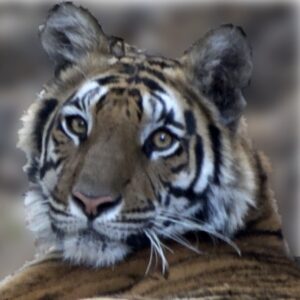
The tiger is an apex predator. It is blessed with an array of astonishing weapons and tools in its hunting arsenal (see detailed deconstruction below). It is a solitary hunter and a superb swimmer. Females weigh 350+ pounds while males weigh 400 pounds. Tigers are now found in many reserves in India which also boasts the highest density of population on the planet. The Tiger Conservation Project started in the 1970s is now paying dividends.
FOUND IN:
Bandhavgarh National Park in Madhya Pradesh India, Ranthambore National Park in Rajasthan, India, Panna National Park in Madhya Pradesh India, Kanha National Park in Madhya Pradesh India, Pench National Park in Madhya Pradesh India,
WATCH VIDEOS
Lakshmi Soundararajan
Wildlife, Nature Enthusiast

Tigress Trishuli's Awesome Hunting Arsenal
The Invisible Hunter: Habitat & Camouflage
The foundation for Trishuli's success is her perfect integration with the Magadhi Zone. By mid February, the dominant grass, Kush grass turns a pale, straw-gold. Her vertical black stripes dissolve into the shadows between the stiff Kush stalks. Her body shape (see pancake stalking below) completely disappears from the eye level of a grazing deer.
The Mechanics of Silence: Paws & Gait
Trishuli's paws are her silencers. Her paws are composed of dense fibrous tissue and fat. These massive, fleshy pads act as shock absorbers, allowing her 350+ pound weight to hit the Magadhi road sand or Sal leaf litter without a sound.
This is Trishuli's most vital stealth mechanism. Her hind paw lifts and lands exactly in the print already established by her front paw. This "overstepping" technique allows her to move through crunchy debris by only confirming one "safe" foothold for both paws, halving the noise.
Trishuli keeps her claws retracted within leather sheaths while walking, ensuring they remain razor-sharp and never dull against the terrain. They are only extended when she makes the final, explosive spring.
The Sensory Analyst: Mouth & Scent
Jacobson's Organ: Inside the roof of Trishuli's mouth there is a specialized sensory organ. By curling her upper lip and pulling her muzzle back, she draws scent particles toward this organ. She isn't just smelling; she is "tasting" the air. This "data download" likely confirmed the exact location of the Chital deer and the high alert of the Sambar.
The Radar Array: Ears & "False Eyes"
Trishuli's ears work in a constant radar pattern.
360-Degree Swivel: Her ears operate independently, rotating back to check for threats while moving forward.
Ocelli (False Eyes): There are prominent white spots on the black back of Trishuli's ears. To other predators, they look like a pair of giant eyes watching from behind. Their primary function is a defense mechanism for her cubs, acting as "follow-me" markers in high grass, but they also serve to confuse any rival predator about her orientation.
The Tactical Ballast: The Tail
Trishuli's tail is not decorative. It's a 3-foot long muscle and bone rudder that is critical for balance. When she makes a sharp turn, her tail is working in real time. It acts as a biological counterweight during high speed chases, allowing her to make tight, G-force turning maneuvers without losing her footing. It is a fundamental piece of her tactical ballast.
Copyright 2026 Voyages of Discovery - Discover the Magic of Adventure - Privacy Policy